Graphic design and branding: the authority system

Fredy Polania
Product Strategy • Visual Communication • Web Development
Definition and Scope of Branding
Branding is the term that describes the practices used to differentiate one company from another. It is achieved through the design of graphics, stories, messages, and images. It is fundamental to understand that designing a logo is not branding in itself; it is only one of the components of a complex system.
Through graphic design, it is possible to generate some of these components, such as a visual identity. However, designing a logo does not equate to brand construction on its own; the elements that make it up come from various specialties and professions.
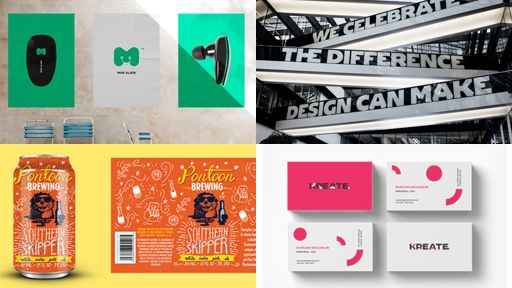
 Branding design with color. Source
1. Brand Implementation
Graphic design combines text and images to meet specific communication needs, allowing visual values to be extended across various media:
- Graphic identities and Logos.
- Brand manuals and Style guides.
- Websites and Digital platforms.
- Social media templates.
- Product catalogs.
- Business cards and Corporate stationery.
 Branding design with illustration. Source
Visual communication allows us to design many of the visual assets that make up a brand, one of the most important being the logo. However, there is another often underestimated element that gives rise to the design system that underpins an identity:
2. The Identity Manual: The Master Document
Also known as a style guide, this manual allows for the validation of the visual context through usage rules. It is what gives rise to the design system. Its key aspects include:
- Logo elements and their proportional relationship.
- Planimetrics and areas of inviolability (protection).
- Color systems and grayscale.
- Corporate typography.
The manual is not just restrictive; it offers implementation examples so that the brand is recognizable regardless of the medium in which it is presented.
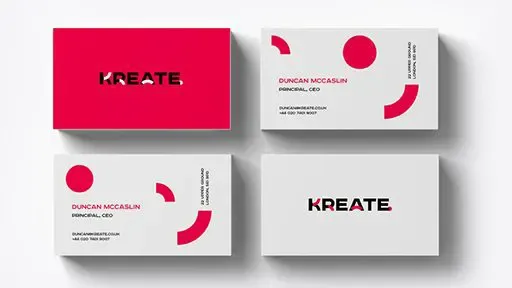 Branding design with shapes. Source
3. Consistency in the Design System
As an Architect, my job is to audit the consistency so as not to weaken the brand’s presence. The critical factors are:
- Hierarchy: Is the logo application legible and does it have the correct weight?
- Visual Tone: Do the corporate colors harmonize with the images?
- Readability: Do the font families work in long texts?
- Value Coherence: Do the images and icons match the company’s ethics?
Presenting branding elements with a persistent design builds a solid and professional image in the minds of users. Consistency is the final bridge to client trust.
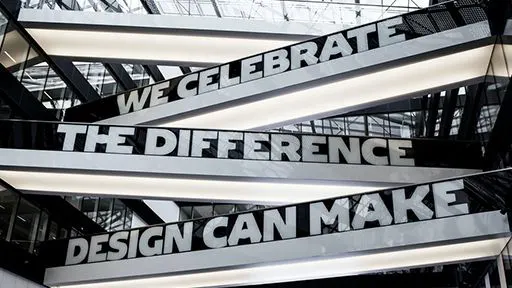 Branding design with typography. Source